Welcome To Workpaper.

Welcome To Workpaper.
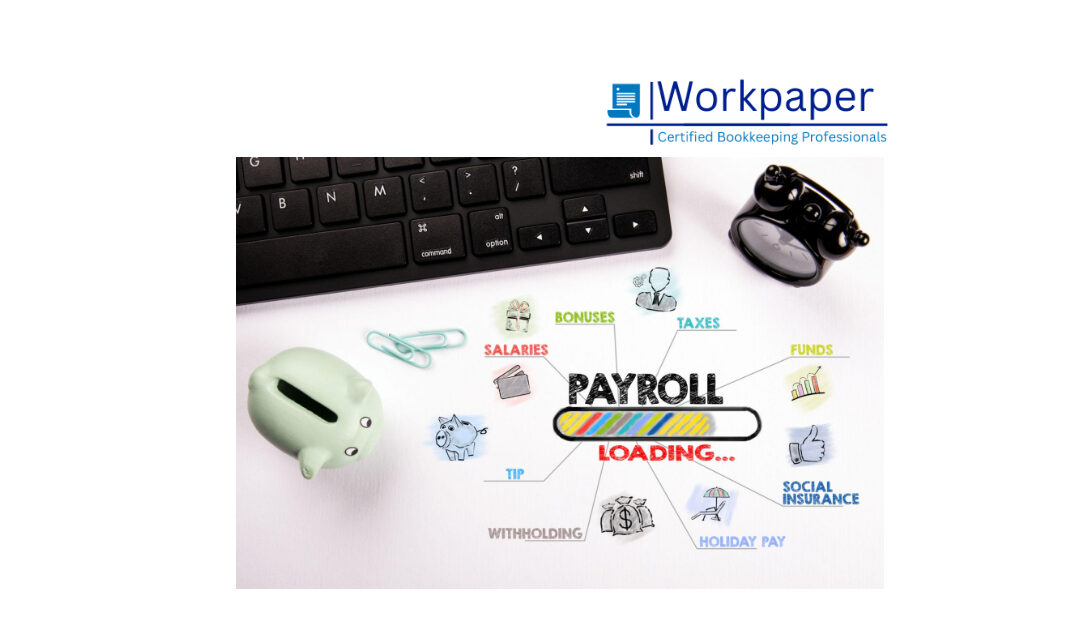
As businesses grow and hire more employees, payroll compliance becomes more complex. One area that often catches businesses by surprise is payroll tax registration.
Many growing businesses focus heavily on sales, staffing, and operations but fail to realise their wage bill may already be approaching state payroll tax thresholds. Missing payroll tax obligations can lead to penalties, interest charges, and ongoing compliance problems.
This guide explains how payroll tax registration works in Australia, what counts as taxable wages, and why proper payroll systems are important for growing businesses.
Payroll tax is a state-based tax applied to businesses once total wages exceed a specific threshold.
Unlike income tax or BAS obligations managed through the ATO, payroll tax is administered separately by each state and territory revenue office.
This means businesses may need to register for payroll tax once wages exceed state thresholds.
The rules become even more complex for businesses operating across multiple states.
One of the biggest payroll tax problems is rapid business growth.
A business may suddenly hire:
* More staff
* Casual employees
* Contractors
* Management roles
…and unintentionally cross payroll tax thresholds without noticing.
Many businesses also incorrectly assume payroll tax is automatically handled through BAS or payroll software.
In reality, payroll tax requires:
* Separate registration
* Separate lodgements
* Separate state reporting obligations
Payroll tax applies to more than just normal salaries.
Taxable wages can include:
✔ Employee salaries and wages
✔ Superannuation contributions
✔ Bonuses and commissions
✔ Director payments
✔ Allowances
✔ Fringe benefits
✔ Some contractor payments
Contractor arrangements are one of the biggest payroll tax risk areas for businesses.
In many situations, contractor payments may still be treated as taxable wages depending on the working arrangement.
As payroll reporting systems improve, state revenue offices are reviewing payroll activity more closely.
Businesses with:
* Rapid hiring
* Large payroll increases
* Multi-entity structures
* Contractor-heavy operations
may face higher compliance risks if payroll obligations are not reviewed properly.
Strong payroll systems and accurate reporting are becoming essential for growing businesses.
Many businesses accidentally create payroll tax problems by:
❌ Registering late
❌ Ignoring contractor rules
❌ Miscalculating wages
❌ Forgetting grouping rules
❌ Relying only on payroll software defaults
Even small payroll setup mistakes can become expensive over time.
Good payroll systems help businesses:
* Track wage growth properly
* Improve compliance reporting
* Reduce payroll errors
* Prepare for state reporting obligations
* Manage growing workforce complexity
As businesses scale, payroll administration becomes far more than simply processing weekly wages.
Managing payroll compliance internally can become time-consuming as businesses expand.
Workpaper supports businesses and accounting firms with:
✔ Payroll support
✔ Bookkeeping support
✔ Compliance workflow assistance
✔ Back-office accounting support
✔ Financial processing support
Strong systems and consistent processing help businesses manage compliance more efficiently as they grow.
Payroll tax registration is often overlooked until businesses suddenly face compliance pressure.
The earlier businesses review payroll obligations, wage thresholds, and reporting systems, the easier it becomes to avoid penalties and administrative stress later.
Growth is exciting — but payroll compliance needs to grow with the business too.
🌐 https://workpaper.com.au
📧 info@workpaper.com.au
📞 0485 825 915
📍 7 Bridge St, Werribee, Victoria 3030 Australia
Workpaper Solutions Pty Ltd
WORKPAPER Is A Valuable Service Provider With An Endeavor To Offer Cost-Effective High-End Quality Solutions.